How to Create a Powerful Acting Resume (Even With Little Experience)

Starting an acting career can feel overwhelming—especially when you’re trying to build a resume with limited experience. But here’s the truth: a well-crafted resume can make a big impression, even if you’re just getting started. Casting directors aren’t looking for lengthy credits—they’re looking for potential, professionalism, and personality. Here’s how to build an acting resume that shines.
1. Start With a Professional Header
Your resume should begin with your name in bold, followed by contact information, agent or manager (if applicable), and essential stats:
- Height, weight, hair color, eye color
- Location (city & state)
- Contact: Email, phone number, website or social profiles
Don’t include your full home address. Keep it clean and direct.
2. Add a Professional Headshot
Most casting calls require a resume attached to a headshot. Use a high-resolution photo (typically 8×10”) that reflects your current look. Make sure your name is printed at the bottom or back of the photo.
3. Create an Experience Section (Yes, You Have One!)
Even if you haven’t starred in a movie or TV show yet, you can still list relevant work:
- Student films or indie projects
- Theater productions (school, community, or local theater)
- Commercials or background (extra) work
- Voiceover gigs or online content
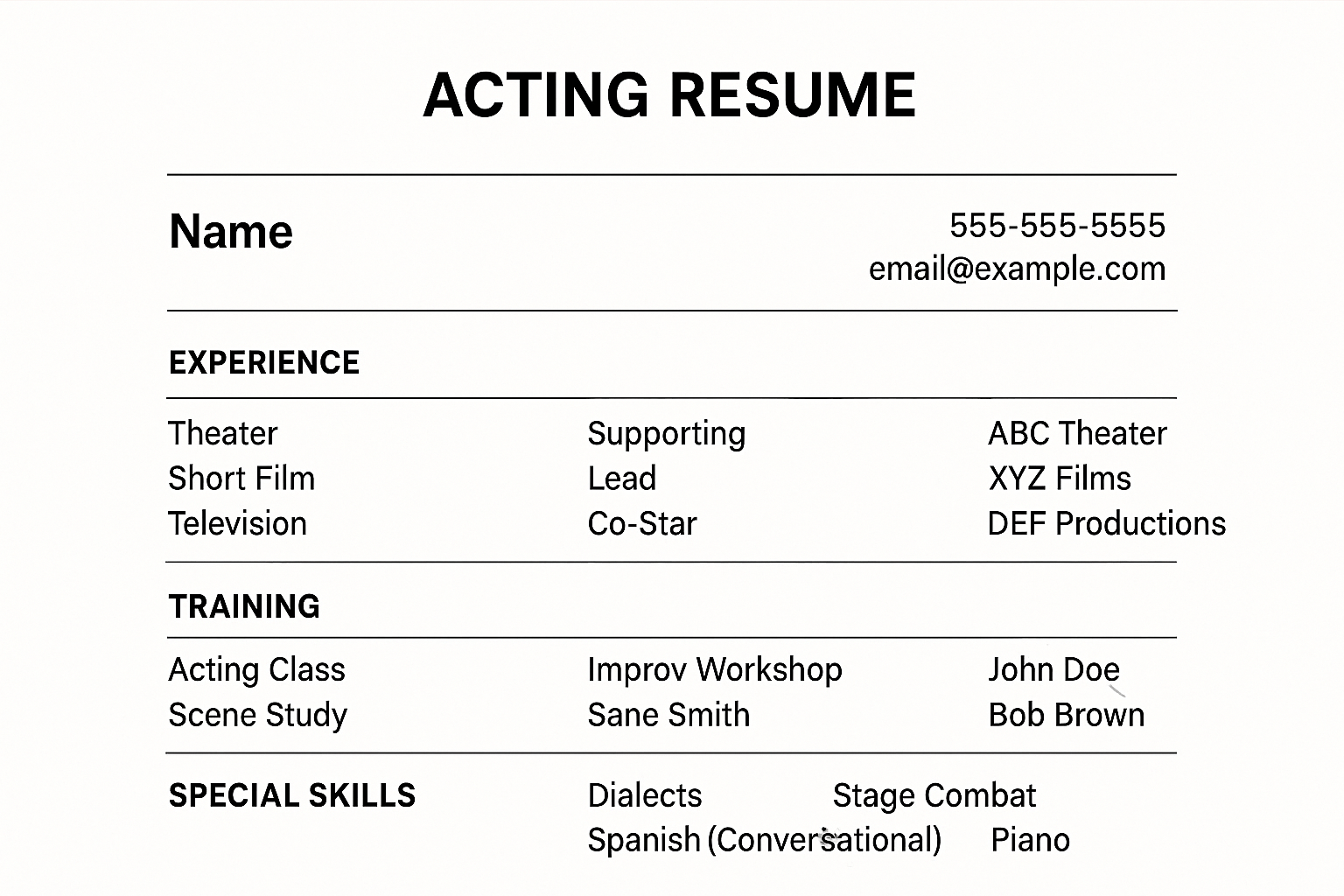
Use a clean format like this:
Project Title – Role – Production Company/Director – Year
If you have no credits yet, skip this section for now and focus on training and skills.

4. Highlight Your Training
Training can often outweigh experience for new actors. Include:
- Acting schools or workshops
- Private coaching
- Specialized training (e.g., improv, on-camera, dialects)
List the course name, instructor, and institution.
5. Don’t Skip the Special Skills Section
This is your chance to stand out. Think:
- Languages or accents
- Singing or dancing
- Sports and instruments
- Stage combat or stunt skills
- Driving license or passport (for travel-ready roles)
Keep it honest—casting directors may ask you to prove it!
6. Keep It Clean and One Page
Your resume should be:
- One page max
- Easy to read (simple fonts like Arial or Times New Roman)
- Neatly aligned and without typos
Avoid fluff. Focus on what’s relevant to casting professionals.
Final Thoughts
Every actor starts somewhere. Don’t worry about not having major credits—focus on what you can bring to the table: drive, training, and unique skills. A strong, truthful, and professional resume tells casting directors you’re ready to work—and that’s what matters most.
To learn more tips and tricks for actors and models, feel free to sign up for our next FREE Online Workshop. On this free Online Workshop, you will learn about the recent changes in the modeling and acting industries that are opening the doors for more job opportunities. You will also learn cutting-edge ways to have good-paying modeling and acting jobs in your local area, flood into your email inbox on a regular basis. You will learn what to do to land these jobs from the comfort of your own home. Click below to register now!